

Mission and vision
The overall goal of this research is to contribute to develop autonomous and resilient learners, citizens in Canada and worldwide, in the Education for sustainable development field through emancipatory experimenting and gaming in an organizational context. More specifically, we want:
1. To train young students in Education for sustainable development approaches, particularly in strong sustainability and
2. To examine in detail and in real time the neurological measures linked to the task, in particular cooperation.
An interdisciplinary team
The team required for this project is comprised of 3 researchers. The team has unique expertise to bridge sustainability, corporate management, and neuroscience. The researchers have a vision for the field of educational neuroscience, experience in behavioral and neurophysiological data acquisition and analysis, and organizational knowledge and participation with respect to dissemination of research results pertaining to educational innovation to varied audiences.
The three researchers met and started to work together under the umbrella of the ISC (Cognitive Science Institute at UQAM), where they shared recently joint activities like co-teaching, development of a new master in cognitive science, design of research axis in organizational cognition plus participation to the ISC 2021 Summer School on Climate Change with 35 world renewed researchers (see: https://isc.uqam.ca/isc-2020-summer-school/ ).
Lejeune, Albert

Lejeune PI (45% of this project, 80% of his research activity) was director of the Cognitive science Institute (ISC) of the University of Quebec at Montreal (UQAM) from June 2017 to May 2021.
Educated and trained in business and technology (Ph.D. in 1994), Lejeune decided in 2009 to dedicate his professional life to better train business students in physical environment challenges like biodiversity and climate change while staying an active teacher and researcher in the field of information systems and digital transformation of enterprises. This new career period is founded on a (second) Ph.D. in Cognitive Informatics where Lejeune exploited theories and tools from cognitive science and informatics to create new tools to assist managers in designing green business models.
Elected as a director at the Cognitive science institute, Lejeune co-organized a 10 full days Summer School on animal sentience (2018) with Prof. Stevan Harnad and led a 10-day Summer School on the cognitive challenges of climate change with participation of 34 of the best researchers in the domain, from Dennis Meadows to Robert Constanza. Beside his second PhD, Lejeune led a 2014-2016 SSHRC project on a comparison between Finland and Quebec in the application of ‘Building information modelling’ in the two national construction industries, or the digitalization the design, planning, construction, and maintenance of buildings. Methodologically, Lejeune is an expert in interviewing and transcripts coding (Grounded theory), design and co-design approaches in research, gamestorming and board games.
Previous ouputs
Lejeune finalized formally his second thesis in January 2017. A summary was published as a chapter in book entitled “New waves in innovation management” in 2018. From 2016 to 2018, different conference papers (International conference on Information Systems, Dublin, 2016) were presented and articles were published (Construction management and economics, 2019) on the Finland-Quebec project. Following his second thesis, Lejeune has several articles under development.
Mercier, Julien

Mercier (35% of this project, 30% of his research activity) is director of NeuroLab, a major CFI infrastructure at UQAM. He is an active, recognized and accomplished researcher in the area of cognition and instruction. He specializes in applied cognitive science, with an extensive technical background in the development of computer tools for learning. Mercier has made significant contributions in the field of applied cognitive science, including human tutoring, intelligent tutoring systems, interactive learning environments, and collaborative learning. Mercier has extensive experience in the collection and analysis of process-oriented behavioral data for the study of cognition in individuals (think-aloud protocols) and dyads (conversation data), and this researcher is a recognized methodologist regarding the study of sequences of events (sequential analysis). He spent the first part of his career extending intra-individual cognitive models to social aspects of cognition.
Ten years ago, he began exploring the perspective of affective and cognitive neuroscience as a natural extension to this framework, which led to the research program underlying the substantial funding of NeuroLab. He developed a general framework identifying key concepts linking current behavioral research on learning interactions with a cognitive and affective neuroscience perspective that is operational enough to frame studies at NeuroLab. His current work aims to test and further develop his framework and its applied implications in policymaking with UNESCO, in priority research areas in Canada, such as science education, reading instruction, artificial intelligence and in high-tech industry such as drone piloting and videogames.
Previous output
Mercier has published work on tutoring and collaborative learning in top 10 journals in the domain, and co-authored major papers in science education and reading instruction. With the support of SSHRC since 2014, he is pioneering a new field merging so-called “online continuous measures of learning” with collaborative learning for which he developed theoretical foundations and methodological approaches. The theoretical and methodological challenges are as numerous as the potential outcomes, but to tackle these he has gradually assembled a larger team within his lab comprising computer scientists, psychologists and neuroscientists and various domain experts. He supervises excellent PhD students in two domains crucial for the current project: education and cognitive informatics.
He publishes theoretical, technical, and empirical pieces of work with them in education, psychology, and computer science. Mercier studies cognition and affect in learning contexts as temporal series of states embedded in a dynamic context of performance. These learning and performance contexts involve from time to time the use of technologies, including tutoring systems. His approach is gaining massive interest in many other fields of application, and he currently works with the industry (videogames, drone pilots and hostelry). These seemingly disparate projects reinforce each other by alternatively focusing on a complex context (e.g. hostelry), predicting clearly identifiable events (e.g. drone crashes) or using advanced artificial intelligence techniques in interpreting data (videogames). The results of his research are used to fine-tune all these contexts to better accommodate human cognitive and affective functioning in those contexts. Starting in 2010, Mercier routinely presented new methodological approaches at conferences and seminars. He participates energetically in two research centers in education and neuroscience. He has reviewed a considerable number of manuscripts for scientific journals, including top-tier journals.
Nach, Hamid
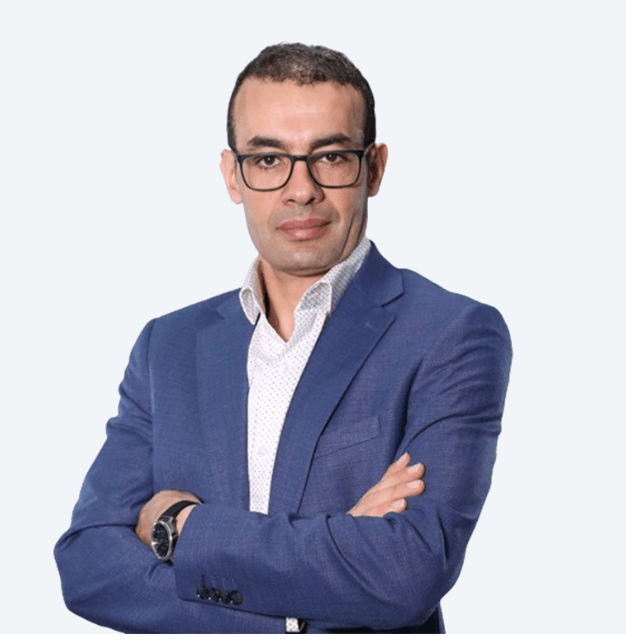
Dr. Hamid Nach is a full Professor of Business Technology Management (BTM) at the University of Québec in Rimouski (UQAR) and invited researcher at the Institute of Cognitive Sciences ( University of Quebec I Montreal) . With a career spanning both academia and industry, Dr. Nach has established himself as a leading expert in the integration of technology, business, and organizational studies. At the forefront of his research is a focus on digital transformation and emerging technologies. His work has been widely recognized, with publications in peer-reviewed journals and contributions to numerous book chapters.
Dr. Nach’s insights are frequently sought after, leading to invitations as a speaker at international conferences and consultations in both corporate and public sector environments. Dr. Nach is the founder of the Canadian Conference of Fintech and Insurtech. He also serves as the Director of the Applied Fintech Research Lab for Africa (AFReL-Africa), an initiative dedicated to studying and promoting Fintech solutions in Africa.
Dr. Nach was recently appointed as an affiliated researcher at the Institute of Cognitive Sciences at UQAM to foster projects on education, technology, and sustainability. Dr. Nach’s expertise is further acknowledged through his service on the Canadian BTM Accreditation Council and his past leadership roles in scholarly associations, including his role as Division Chair and Divisional Editor for the Administrative Sciences Association of Canada (ASAC) in the Information Systems track.
His teaching portfolio covers a broad spectrum of BTM subjects, including e-Business, AI for Business, Business Analytics, and Enterprise Architecture and Governance. Dr. Nach is known for his innovative approach to education, leveraging technology, state of the art materials and videos as well as Learning Management Systems like OpenEdx to enhance student engagement and learning outcomes. He teaches at varying levels, including executive education. Dr. Nach is also an active participant in media discussions, sharing his insights through TV, radio, podcasts, and online videos. He has a talent for making complex technological concepts accessible to a wide range of audiences, contributing to broader public understanding of technology, business, and society.
Website: hamidnach.ca
David Holford
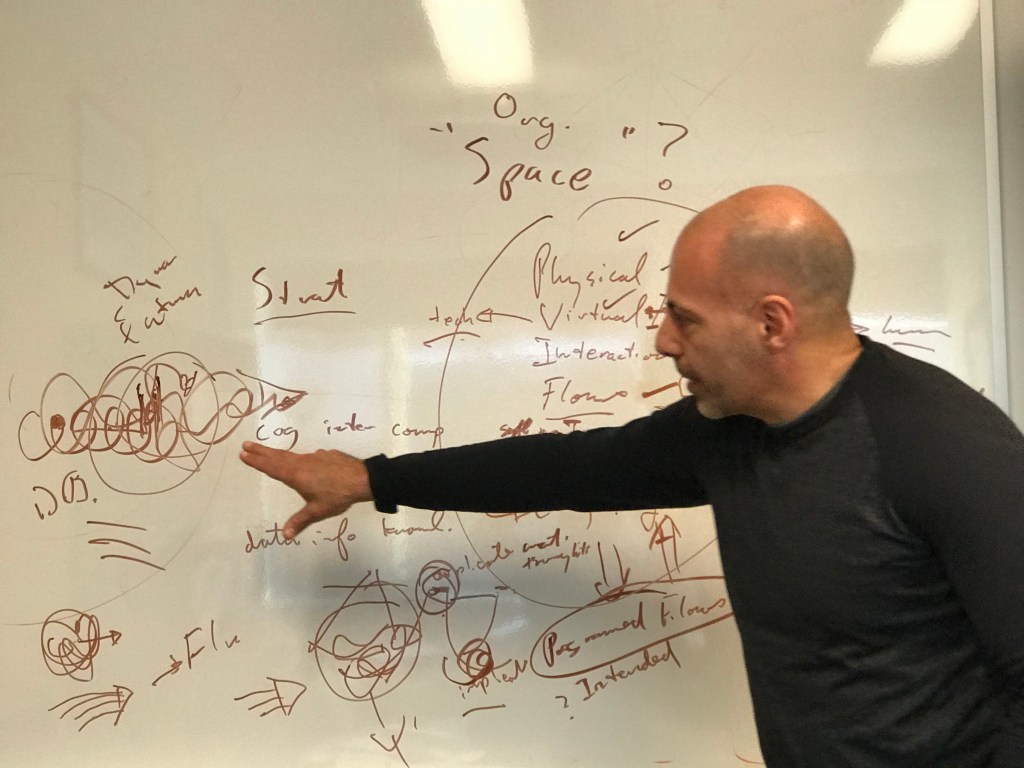
The late Holford, David
Holford Holford (20% of this project, 30% of his research activity) is a member of the Institute of Cognitive Sciences at UQAM. He is an active and accomplished researcher in organizational cognition and behaviour, phenomenology, and human-machine interactions. He specializes in knowledge theory and sense-making, with an extensive theoretical background in human-machine design philosophy. Holford has made significant contributions in the field of human-machine interactions, including its effect on human adaptive expertise as well examining ethical considerations and human control within sociotechnical systems. Holford has extensive experience in the collection and analysis of sense-making processes and tacit knowledge expertise within organizations. He spent the first part of his career examining dialogical processes within workgroup environments. Ten years ago, he began examining tacit knowledge expertise, and its associated challenges in identifying it, as well as retaining it within organizations. Three years ago, he began to conduct research in organizational cognitive processes across the lens of embodied cognition. He elaborated and formalized a knowledge framework emphasizing embodied human expertise and capabilities across the intra-categorical concept of mètis. His current work aims towards testing and further developing his framework across various socio-technical settings involving human expertise and professions such as radiology, orthopedical surgery and engineering. Previous output Holford has published work on human-machine ethics, knowledge theory and management in top 10 journals in the domain. He also published books in human-machine interactions (2021) and knowledge management (2020).
Research assistants:
Postdoctoral assistant:
Samaneh Zolfaghari

Samaneh holds a Ph.D. in Industrial Engineering, where she honed her expertise in optimizing complex systems and solving intricate management challenges. Her academic journey was marked by serving in dual roles as both a teaching assistant and research assistant. These experiences not only enhanced her skills but also deepened her understanding of the field’s nuances.
She has engaged in the academic community through her publications in journals and at international conferences.
In her current post-doctoral position at UQAM, she continues to expand her research horizons and contribute to innovative projects. This role allows her to further develop her expertise by conducting comprehensive literature reviews to stay at the forefront of developments in related fields. Data analysis techniques enable her to extract meaningful insights from complex datasets and drive evidence-based decisions.
Google scholar : Samaneh Zolfaghari
LinkedIn : Samaneh Zolfaghari
Doctoral students in cognitive Informatics:
Hamid Shirazian (notice to come)
Emmanuelle Liard

Emmanuelle is a research assistant and PhD student in Cognitive Informatics (DIC) at UQAM, starting January 2025. She possesses a technical degree in computer science (2021) and an engineering degree in cognitive sciences from the Ecole Nationale Supérieure de Cognitique (ENSC) in France (2024).
Passionate about sustainability, knowledge sharing, and organizational collaboration, she joined the Neuroworks project to design an IT application addressing these needs. Her responsibilities include developing the IT solution, managing the project’s website, and fulfilling other research assistant duties, leveraging her expertise in IT, human factors, and user experience (UX).
LinkedIn : Emmanuelle Liard
Master students:
Benjamin Cayouette, B.Sc.

Benjamin is a master’s student at the École des Sciences de la Gestion (ESG) of the Université du Québec à Montréal (UQAM), in the Department of Strategy, Social and Environmental Responsibility (CSR). He is also a research and teaching assistant. As part of his dissertation and research funded by the Chaire de décarbonisation du Québec at UQAM, he is directed by Professor Mark Purdon to map the political economy of regional electricity integration in northeastern Canada and the United States. Then, under the supervision of Mr. Albert Lejeune, Mr. Julien Mercier and Mr. David Holford, he is taking part in a research project aimed at developing autonomous and resilient learners, citizens of Canada and the world, in the field of education for sustainable development through experimentation and emancipatory play. Finally, Mr. Cayouette holds a bachelor’s degree in International Studies from Univsersité de Montréal and is certified by La Factry School of Innovation. He is a teaching assistant in ESG’s Management Department.
LinkedIn : Benjamin Cayouette
Geneviève Parent

Geneviève Parent is a student in Cognitive Informatics at the Université du Québec à Montréal (UQAM), where she recently completed a master’s degree focused on cognitive fatigue in learning.
Driven by her passion about neurosciences and cognitive processes, she participates in several projects as a research assistant at Neurolab, a neuroscience research laboratory founded by Julien Mercier. In this role, she collaborates on innovative research initiatives, leveraging her skills in computer science and cognitive sciences to explore new solutions and enhance the understanding of learning mechanisms.
 Neuroworks